Thursday, November 17, 2011

A Day in the Life of Ilana

A while ago Nate wrote a blog post labeled “A day in the Life of Nate,” so I figured I would finally do a day in the life of me. So let’s begin this exciting journey. My days begin and end much earlier than in the states and if you know me and know how much I love to sleep you would be surprised that sleeping in is 8am. I know, crazy right? So on a typical work day I am usually up by 6:30am at which point I decide if I want to work out, prep dinner or clean. I would say that my week day morning routines have quite the variety and I switch it up almost every day. On days that I decide to workout I do like Nate described pretty accurately as a prison-style workout, which consists of either a yoga routine, a resistance band workout and on especially energized mornings I do a P90X routine. On days that I want to clean, I sweep the floors of all the dead critters from the night before, yes at night moths, flies, and all sorts of other small beetles magically die and land on our wooden floor that also collects and absurdly large amount of dust, there is also gecko poop and on really awesome nights bat pee, once I sweep, wipe down surfaces of small bugs I help Nate make breakfast and begin prepping dinner for the night, which can mean soaking beans, cutting up onions, sunning okra (it makes it less slimy) and making a list of any missing ingredients we need to buy at the shop. Nate and I usually have coffee and fruit or some egg dish and talk about what our days have in store for us. At around 8am, I get dress, Nate leaves for work and I finish little odds and ends, which usually is pumping water. Pumping water is not as hard as it sounds, I am not literally hand pumping water, I plug an extension cord in an outlet and wait for our bottom tank to be pumped up to our upper tanks until they over flow. Pretty simple, yet stressful if it’s the dry season, since our only source of water is rain water. On a side note, rain water is painfully cold, especially on a raining day. I feel as though I am 6 years old again, because I dread I mean dread showering every day and complain about it. You would think I would plan better and shower when the sun is still hot and I am sweating, but nope I wait till about 7pm every night when I am no longer sweating and do not look forward to a cold shower.

The Mabaruma Regional Hospital

Once I leave for work, which is usually around 8:30am I always go to the hospital and open up my office which I share with the statistical clerk, well only when we have one employed. My schedule really varies from week to week, depending if there is an event, I am doing a health talk at a school, I am traveling on the river to do some research or health talk or I am working on a specific project. For example, about a month ago Nate and I and a team of about 6 other Guyanese and volunteers spent 5 days on the river doing surveys at all the schools in the sub region to find out what the most common disabilities are in the schools and what resources teachers have to serve and teach these children. As you can imagine there are no resources for teachers to work with the SEN population and two very interesting findings were that there are absolutely no physically disabled children at the schools, even though we see them at the hospital and children who live on the river are 3 times more likely to have a speech impediment or developmental delay. My theory on why children are more likely to be developmental delay on the river is because of isolation. Some of these river communities have the population of five; yes I wrote that right…five. A community is one family and there is not another soul for miles, I mean miles, and they don’t have a motor boat, just a paddle boat. So some of these children don’t see other children there age until they enter school at age 4. Imagine! Ok back to my weekly schedule. Every Tuesday I work at the Maternal and Child Health Clinic with babies and pregnant mommies. I also do a health talk about family planning, nutrition and hygiene on less hectic clinic days. We also have clinic the second Wednesday and third Friday of each month, don’t ask me why these are the days that the clinic is open, it just is. Not that you can’t get services any other day of the week, but no one seems to come to the clinic other than these specific days. Monday afternoons I run a health club that is named Club HEAT! Club HEAT means Health & Environmental Activist of Tomorrow. Like the name? Yup I came up with that. Brilliant, I Know! Club HEAT always has some sort of project or activity going on, so that occupies my time. This month we did a Cleanest Class Competition, and at the end of this month we have about 4 activities for World AIDS week and then we are doing a fundraiser, which will be a movie night at the local resource center for the kids. The admission is $.50 US to sit on the floor or $1US to sit in a chair. I think we will be showing a x-mas movie. I will write a blog post about that when it happens. Most days I work from 8:30-4:30 and on Fridays it is an early day, which means work only until 3:30pm, freakin awesome!

Dental Hygiene talk with nursery children.

Asking the kids to show me their Pearly Whites

River Trip. Notice the stand alone house.

My friend Dexter working infant clinic.

A busy clinic day.

Evenings! Well at least once or twice a week on the evening we do our laundry, which usually takes an hour to an hour and half, and then we make dinner (which usually is very elaborate, since everything is made from scratch) and watch either a show or movie on our computer. Other nights we use the internet at our jobs or down the way at the Canadian family’s house and then make dinner and yup you guessed it watch a movie or show on our computer. Friday nights are Pizza night! We make everything from scratch, of course not the cheese, which is white cheese; though recently we have figured out that white cheese can mean white cheddar or mozzarella. We never know what it will be, until we take our first bite. Fridays is also cocktail nights, so we buy some rum or vodka (that’s all there is) and make ourselves a little cocktail and talk while swinging in our hammocks.

Weekends have a pretty set routine. Saturday is market day in the morning, cleaning and doing our laundry and the afternoons we usually read, go for a walk or hangout with other volunteers. Sundays, we have brunch with some other volunteers and then hang around the house. Some weekends there are “Games” and we go to those or we go to a swimming hole. Nothing too exciting, but it keeps us entertained. So there you have it. What a week in my Peace Corps life is typically like.

Nate at a river school. I just really like this picture.

Till next time.

Thursday, September 29, 2011

Amerindian Heritage Weekend Celebrations

Last weekend, Nate and I celebrated Amerindian Heritage with three days of wild meat, pageants and music. So let’s start on Friday. A couple months back I was speaking with my supervisor and he had mentioned how difficult it is for people from the river communities to get up to the hospital, due to cost and time, and once they were at the hospital they had no idea what services were provided by the hospital. So we brainstormed on an idea of how to bring services to the people while making them aware of the services offered. Yup you guessed it, a health fair. So once we came up with the idea I began coordinating the fair through the Amerindian Heritage Committee in order to make it part of the celebrations during the month of September, which is Amerindian Month. So Friday was the fair and all in all I would say it was a success and overall a good start. We even got some media coverage on the local news station and on a night-time local TV health program, and my article about the event was published in The Guyana Times Newspaper.


It was the first-ever health fair of this magnitude in my region and I helped coordinate it with the Ministry of Health, Pan-American Health organization, Guyana Responsible Parenthood Association, which is Planned Parenthood’s international branch down here, (I just can’t stay away) and the Dental school. We had eight departments outfit their own benab (that’s Guyanese word for Tiki hut) with a banner to advertise their services and privacy screens to allow persons to visit the booth of their choice without pressure. Once inside the booth, screenings such as malaria smears, TB tests, diabetes screenings, HIV tests, dental exams, vaccinations, and family planning consultations were provided. Additionally, each booth educated their visitors with a brief presentation, brochures and posters and had giveaways like toothbrushes and toothpaste that I got donated. I also worked the large educational tent and provided hands-on demonstrations on hygiene and sanitation. Did I mention I got the whole event paid for by the Ministry of Health, pretty cool! Over 250 people attended the fair, and every school from my community bought multiple groups of children. It definitely brought awareness to the community; though I wish more adults would have attended to get screenings, but hey it’s a start.


Following Fridays kick-off event, we had two days of festivities I didn’t have to plan and could just enjoy ::Sigh of relief:: Saturday night was the Amerindian Pageant that lasted for 5 hours (yes the pageant), needless to say if Nate and I don’t ever see a pageant again, I think we are good. But it was cool to see some traditional dance and eat and drink Amerindian food. We ate pepper pot, which is a stew/soup like dish made with cassava water with lots of hot peppers and wild meat. You eat the pepper pot with cassava bread which taste and looks similar to Matzo bread but made of cassava instead. We had a few different types of wild meat; it was delicious yet I'm not too proud since some of the meat came from endangered animals. Ok so here it goes, we ate tapir or what they call bush cow (adorable, right?) (really endangered), turtle (kinda endangered), duck (not endangered), and wild fowl (not endangered). So of course which one was the most delicious, yup…the tapir. I can’t help it; it was just was very tender and flavorful.


TURTLE!!!


Anyway moving on…we also got to drink local booze. We had fermented cane juice, fermented corn drink and a drink called Fly (not sure of spelling) but it is made of black potatoes and looks like cool-aid (no jokes please). The events on Sunday were what they call a “games day” which consist of really drunk men dancing like fools and children playing soccer or football and cricket and women selling food. It was held in this outdoor park that has the most incredible breeze, so we watched the games and laughed at the drunken men and enjoyed the afternoon by eating our wild meat and drinking our fermented, warm drink. There is still some more heritage activities this month and we are hoping we can cross the last type of wild meat of our bucket list which is Labba and a local drink called pirwahi (spelling?) which years ago it was made with human spit to ferment cassava. I don’t think they do that anymore, I think? Even though we have already had some fried labba and we hear it tastes different when cooked in a stew, we are hoping to get our hands on both items by the end of the month. I guess we will wait and see.

Till next time.
Wednesday, September 7, 2011

We caught crabs!

Get your mind out of the gutter…we went crabbing and caught real crustaceans crab to make a delicious meal. Ok, so Friday afternoon while at work one of the nurses calls me over and asks me if I like to eat crabs. Do I like to eat crabs? I responded enthusiastically. I told her that I am pretty sure in another life I was some sort of sea creature because I love anything seafood, especially crabs. So she explained that in the month of August and September there are two types of crabs, Bok crabs and Bunduri crabs that start marching on the side of the marshes when the tides come up. Bok crab are red and a bit smaller and have tiny little hairs all over its legs and Bunduri crabs are really big and blue. So every year she and her family and friends take a bus load of people to a place called Morawhanna and go crab catching. So naturally, after explaining all of this, she could see the excitement on my face and she invited me. I quickly called Nate and told him that today we were to take a half day to go crab catching with some of our community members. He was in. We rushed home and changed into our stained clothes and filled our water bottles up and grabbed a bucket to head out on our crab hunting adventure. As soon as we got to the bus, we got made fun of because we looked like we were ready to go on a safari expedition and had a bucket instead of a bag to catch our crabs. I guess they climb out of buckets and that’s why you are supposed to take a bag. However, after being made fun of because of our bucket, guess what they used…yup our bucket. After a few giggles and exchange of names, we were on our way to Morawhanna.


It took about 45 minutes to get to Morawhanna and we had to get out of the bus on a few occasions to push it through the mud. Nate got douched with mud before we even got to our destination. We were in the middle of nowhere and we quickly started seeing crabs scurrying across the dirt muddy road to the water. The crew of people in the bus, we were about 20 people, crammed in as usual, jumped out of the bus and started running. I literally mean dashing down this muddy dirt road with sticks like crazy people chasing crabs. It was hysterical and extremely fun. We were so excited we forgot to put on our rain boots and started running barefoot in about two feet of mud. Needless to say, we had so much mud caked on our body when we got home that we needed to rinse off before going into our house and had to shower twice before we were able to remove all the mud.


We ran/ walked down this path for about 3 hours and dead ended at a river where there was a big boat that had been grounded and abandoned. We cleaned off our feet, well as much as we could, and got to sit on the boat and look at the gorgeous scenery, while our awesome tour guides started to boil a large pot of water on some logs they had chopped down.


About an hour later the pot was ready and they started to throw in all the crabs and cook them. We ate the crabs standing in the middle of jungle. It was kind of surreal. They taught us how to roast the backs and put some salt and raw pepper and eat the insides with cassava bread. It was different, but really good. I am pretty sure I ate my body weight in crabs that evening and that was just day one. We caught so many crabs we still had another bucket full when we got home.


The next morning one of our neighbors, who also works at the hospital, knew that we were going crabbing and came over to see what we had caught. She helped us clean all the crabs and prepare it to make crab curry. Each crab has a specific way of killing it and you have to scrap the hairs off the legs and brush the mud off the backs. She brought help, so we cleaned and prepped them rather quickly. Later that afternoon, we went to her house and she taught us how to cook crab legs and claws in a scrumptious curry sauce with white rice. We sat on her veranda, that’s what they call a porch here, for about three hours eating our very successful first crab catching experience. They don’t have crab forks or crackers here, so it takes a little longer when you are breaking the shell with your teeth and hands.


Our neighbor said that she enjoyed sharing in our “labor of love.” I would agree with her, it truly was a freakin “crab-tastic” labor of love.


Till next time.

Monday, August 29, 2011

When Life Gives You Lemons...

So I know its been a while since I have written a blog entry, and well the reason for that is I have been busy (really, I swear) and also I wasn’t really sure what new things to write. It’s interesting…once you have been living in a place for awhile, life becomes more normal and the less you think that your life is exciting, even if you do live in South America in a remote community. Of course that feeling is two-fold, you finally feel settled and accustomed and you can exhale, but on the other hand you are settled and accustomed a.k.a. “a bit more boring.” So let me see if I can update you all in what I have been up to.

My days at the hospital are pretty busy, I work with almost all the departments on some sort of capacity building or marketing project, I am putting my Public Relations major to good use. You probably are asking, “Marketing? In a developing country?” Well, the type of marketing I do is a bit different. I would call it more “community relations,” were I do projects to raise awareness of certain issues or educate the public on the services the hospital provides and their usefulness. For example, in the next month I will be planning a health fair at the market as a way to educate all the people that come from the river on the services available to them. Like the dentist and the importance of brushing your teeth, that if you fall and hit yourself you can get an x-ray to see if a bone is broken, and that getting your eyes tested can determine if you need to wear spectacles (they call glasses, spectacles here, adorable, right?), etc. Also, it’s a great way to do health talks on water hygiene, washing hands, food storage, family planning and malaria, some of the bigger issues here.


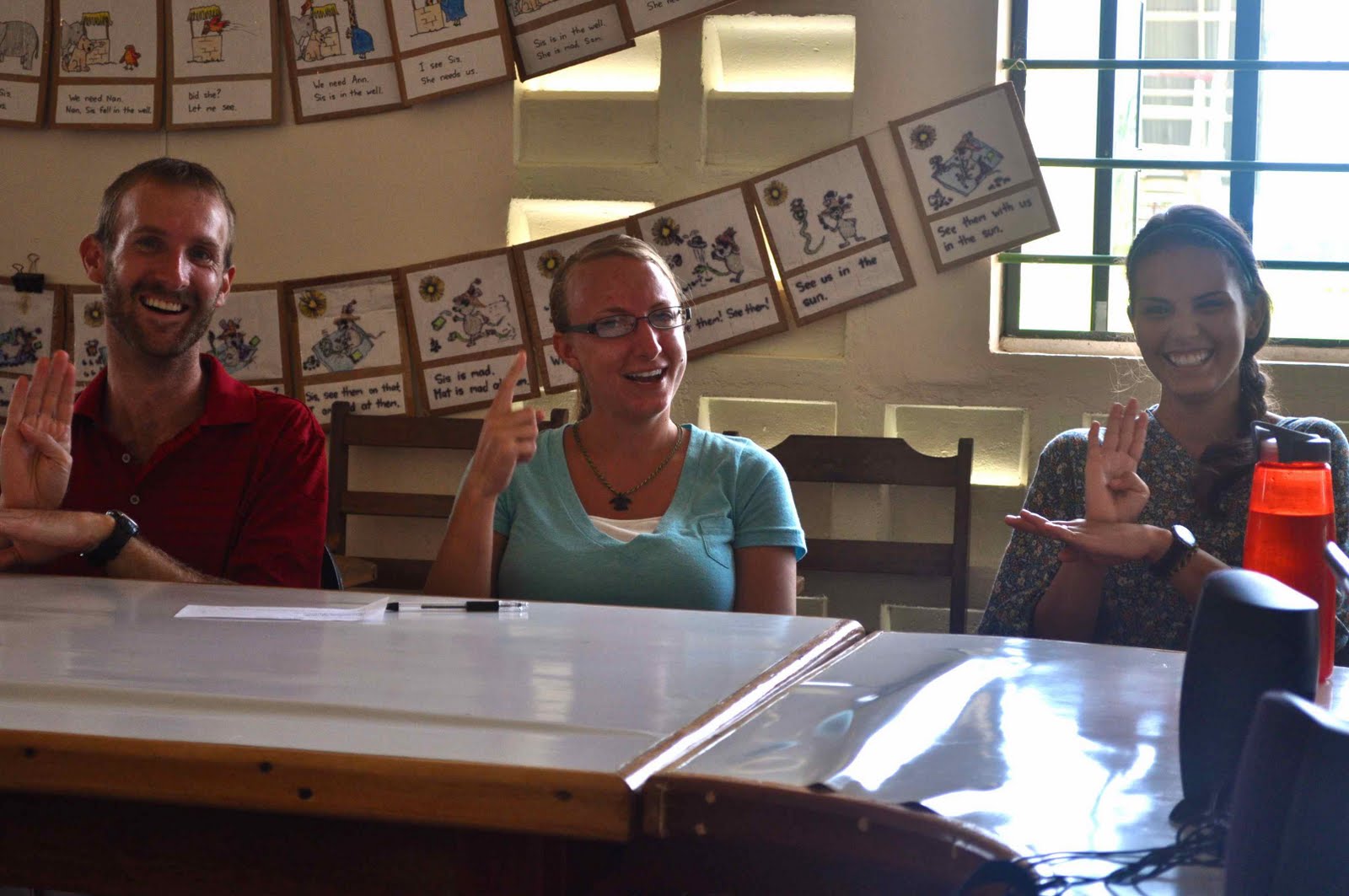
I have also been working extremely close with the rehabilitation department and working with children with disabilities. This past week Nate and I planned a weeklong training for teachers and community health workers (CHWs) on “deaf culture and education.” We other Peace Corps volunteers, one who is deaf, do some trainings on sign language and deaf culture. Even though the sign language was a huge hit, I think what hit home the most was having the teachers and CHWs see a person who’s not held back by his deafness. They just couldn’t get over the fact that a person with a disability could be a teacher. We had people come from around the community and ask to see the deaf guy, as they so delicately put it. And when we introduced him, without hesitation they would say, “No, he can understand me and speak, he is not deaf, you are lying.” Since the volunteer who came could read lips and speak, they were shocked. Unfortunately, any person who has a disability here is thought of as not capable of doing anything, so it was great to show them the opposite and even give them some skills to try and advance the children with disabilities in their community.

But even though we are busy with all these projects and when we have a successful program we are thrilled and feel on top of the world, there are more hard days than easy ones. I remember being in graduate school and sitting in on some of my international health classes, and thinking the solution for all the problems in developing countries is just education. Just educate the CHW’s, teach them and the problem is solved. Wrong! It is way harder than that. First of all, it takes at least six months for people in your community to start not seeing you as a weird outsider or just another volunteer that is here building their resume. And I sometimes wonder if some people will ever stop looking at me in that manner. Then it takes the next… well I actually don’t know how long it takes for people to buy in to your ideas. And if they do buy in there just never seems to be an end to how much training and follow-up it takes to make a sustainable change, unless the community takes an active approach. And on top of all of that, the resources are way limited and well sometimes you feel like you are moving a huge boulder to the top of a hill all by yourself.

I know, I know…this is nothing new. Any person, organization, volunteer, non-profit, you name it, has felt this way before if they have ever worked for a cause or a vulnerable population. But you just never really understand how hard it is, until you are doing it. Don’t get me wrong, I love the challenge and I hope that something (however small it is) sticks when I leave, but that’s the thing with development, you just never know. It’s true what someone once told me, that doing development work you will never experience a time when the highs are some of the highest and the lows are by far some of the lowest. The worst part is that the lows just come out of nowhere and slap you in the face! But like my loving and very eloquent husband says, “Baby when life gives you lemons, paint that shit gold!” And so that’s what we will continue to do, even on the hardest of days.


Till next time.

Saturday, August 13, 2011

Mabaruma Eco Hostél

Hi all. Sorry it's been so long since our last post. Things have been getting pretty busy. Almost a month ago we departed for Georgetown for the 3 month reconnect conference where PCVs meet up to share what we've all been up to at our sites. It was really great to see everyone and hear all that they've been doing. It was also really nice to sleep in an air conditioned room without a mosquito net, take hot water showers, shop for supplies to bring back to Region 1, and eat food that other people prepared and then cleaned up. Another definite highlight was getting to spend some time with our host mom, Debee back in Vreed en Hoop.

After the reconnect conference week, Ilana and I stayed out another week. I was participating in a solar energy training and she was networking and working out some logistics for getting some resources for us in the future. The solar training was awesome, I think I learned more in 3 days at that workshop than I have in some semester-long college courses. Before I barely understood how any electrical appliance worked and now I feel confident that I could meet with a client, design a solar energy system to meet their needs, buy the components, install the system, and teach them how to maintain it... after only 3 days!! Thanks to the facilitators Jermaine,  Robin, and Duch.  Definitely a skill I'd like to develop more.

It was really nice to come back to our home in Mabaruma. I'm sure there will be some more adjustment surprises in the future, but we finally feel like we're getting things figured out. Living is way easier now that we know simple things like knowing who sells the best eggs, who to talk to when the roof leaks in the middle of rainy season, the phone number of drivers who can pick up a stranded friend at the airstrip, etc. 

We've also had some exciting work developments. As you know Ilana recently had an article published in 2 out of 3 national newspapers in Guyana highlighting an event she coordinated to improve awareness and services for people with disabilities in the Region. Yesterday we found out we received funding for a week of training on deaf education and culture.  We'll be able to fly out 2 specialists from Georgetown to facilitate trainings for teachers, children, and their families.

I'm also proud of another project that I just got approved, $2 million GUY ($10,000 USD) to improve adult literacy in Tobago Village. That will be enough to fly and accommodate a trainer, conduct training for literacy facilitators, purchase and ship adult literacy materials, and fund the implementation for the program for at least 1 year. Very exciting!!!

Well that's the update. Below is a video advertisement for a sweet little Eco Hostel in Mabaruma. We've seen it and I would strongly recommend it to anyone thinking of coming to visit. It's only $0 per night! Check it out.


Mabaruma Eco Hostel from n8stew on Vimeo.

Monday, July 18, 2011

UPDATE: Marching away...my first event in Mabaruma

This just in...The event we hosted in Mabaruma was also picked up by another national newspaper, Kaieteur News. They featured it in a full-color, full-page spread in the Sunday edition.


Saturday, July 16, 2011

Marching away...my first event in Mabaruma

So remember about two months ago when I talked about persons with disabilities and special needs education, well last week I helped coordinate my first event in Guyana with the purpose of drawing positive awareness about persons with disabilities and to give the community an opportunity to address the needs, learn the history and celebrate these individuals in Mabaruma. The three-day event consisted of a march to draw awareness and two days of physicals for persons with disabilities that live in river communities. This type of event was the first of its kind in our community and I would say it was rather successful with 90 people attending the march. We started the march Tuesday morning at a shop down the road from the hospital and marched through the center of the compound to the recreational park with thirty-five children and adults with disabilities from five communities, their families, hospital and education staff, Peace Corps volunteers and community members. Once at the recreational park we had a one-hour ceremony that included an address from the rehabilitation assistant, a musical performance by the one and only Nathaniel Stewart (he is a musical icon here, if you didn’t know), and a finger-painting activity for all the children and adults that will soon be displayed at the hospital.


Following Tuesday’s event, I helped coordinate two days of physical examinations for children and adults with disabilities, that included an eye test, dental screening, vaccinations, physical exam with the doctor and a rehabilitation assessment. Twenty-seven children and eight adults were screened. This was the first time many of these people had ever stepped inside of the hospital, let alone received a full work-up. It was touching to see some of the adults so excited to receives glasses so that they could see better. One 35-year old man with Downs Syndrome had a fractured wrist for two months and didn’t even know it. But since he couldn’t move his arm due to so much swelling, we took an x-ray. Come to find out, he had two small fractures in his wrist after slipping on some mud. Once we set the bones, we were able to put it in a cast. Success! One young boy with cerebral palsy was fitted for a wheel chair and will now be able to move around and not have to be carried everywhere. Just some of the more memorable stories of the week. It was really great to see the staff at the hospital come together and help a very underserved community access medical care. After, three days of running around and dealing with all the hiccups events usually have, especially in a developing country (coordinating transportation was hell), I was extremely pleased with the outcome of the event. The icing on the cake is… I wrote a press release and Nate took some snazzy pictures and we submitted it to the national newspapers of Guyana. Guess what, one of them picked it up! Nate’s picture and a section of my article were published in color on the front page of “Stabroek News” nationwide newspaper. One event down, who knows how many more to come!


Does this look familiar?
It's the picture from the newspaper article. :)
Till next time.